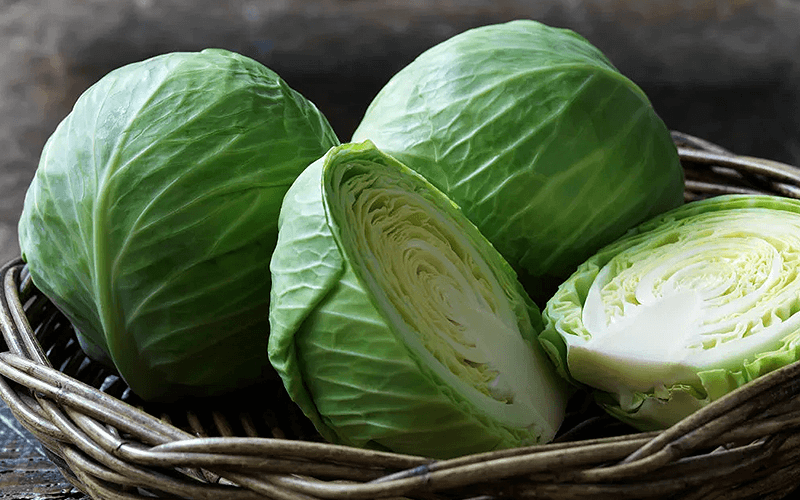
Fresh Cabbage Exporter from India Sardar Market
Fresh cabbage (Brassica oleracea var. capitata) is one of the most widely traded vegetables on the planet. Supermarket chains, wholesale markets, hotels and food-processing units all depend on a steady, dependable supply of firm, crisp green heads and that supply has to hold up week after week, all year round. India is the world’s second-largest producer of cabbage, turning out more than 10 million tonnes a year (FAOSTAT, latest available data), yet we export only a tiny fraction of that. For buyers looking beyond the usual sources, that gap between production muscle and export activity is precisely where the opportunity sits.
Based in Surat, Gujarat, Sardar Market is an established Indian exporter, wholesaler and supplier of fresh vegetables. We run the full supply chain ourselves from farm-direct procurement in India’s top cabbage belts, through careful grading and forced-air pre-cooling, to delivery in refrigerated containers at your port. Every head is packed to meet the import rules and retail expectations of your market, and our location puts us within a short haul of Mundra, one of India’s busiest container ports.
Why India’s Cabbage Export Market Is Worth Your Attention in 2026
India grows more cabbage than almost any other country, but its share of global cabbage exports still hovers around one-tenth of one percent. That mismatch between production strength and export activity is exactly why international buyers are starting to look our way. Here is why India, and our sourcing network in particular, is the right place to buy:
- Volume without limits: As the world’s second-largest cabbage producer, India can commit consistent export quantities across every season.
- A cool-season crop with a year-round calendar: India’s plains produce cabbage mainly in winter, while hill belts and warmer southern regions carry the summer crop together they give buyers almost continuous supply.
- Competitive FOB and CIF pricing: High production volumes and a short haul to western ports keep freight and landed costs low.
- Zero UK duty from 2026: The India-UK trade agreement, in force since 15 July 2026, removes duties on fresh vegetables.
- A compliance-ready chain: Documented residue testing, phytosanitary certification and farm-to-packhouse traceability open the premium EU, UK and Gulf markets.
Our Sourcing Network & Harvesting Seasons
Cabbage is a cool-season crop, so India’s plains produce it mainly in winter, while our hill belts and warmer southern regions carry the summer crop. We source from several states so that we can ship almost every month of the year.
Strategic Sourcing Clusters
Our procurement teams work directly with farmers and farmer producer organisations (FPOs) across India’s leading cabbage states:
- West Bengal & Odisha: Together these two states account for over a third of India’s cabbage output the single most important sourcing belt for us. The alluvial Gangetic plains of Bengal (Hooghly, Purba Medinipur, Howrah) and coastal Odisha (Khordha, Balasore) give us high-density heads during the main winter crop.
- Gujarat & Madhya Pradesh: Our home turf. Gujarat is India’s fourth-largest cabbage-producing state (about 876,000 tonnes in 2023-24) and sits close to Mundra and Nhava Sheva ports, which keeps inland freight costs and transit times low. Madhya Pradesh adds strong volume across the central belt.
- Bihar & Uttar Pradesh: High-volume winter suppliers from northern India. Uttar Pradesh is among India’s most productive cabbage states, with yields around 28 t/ha, making it ideal for bulk contracts, while Bihar’s Patna-Nalanda-Muzaffarpur belt delivers consistent supply.
- Assam: Known for naturally sweet, crisp green heads grown in the cool northeastern valleys (Kamrup, Nagaon, Dibrugarh).
- Maharashtra & Karnataka: Our off-season insurance. Warmer-region and hill-grown crops here let us bridge gaps when the northern plains have finished harvesting.
Sowing & Harvesting Calendar
India grows cabbage across three seasons. By balancing regions and seasons, we maintain commercial supply almost year-round:
| Sourcing Cluster | Peak Supply Window | Notes |
| West Bengal & Odisha (Hooghly, Purba Medinipur, Howrah; Khordha, Balasore) | November – February | Main winter crop; largest combined production base |
| Gujarat & Madhya Pradesh | November – March | Winter crop; short haul to Mundra / Nhava Sheva |
| Bihar & Uttar Pradesh (Patna–Nalanda–Muzaffarpur) | December – March | High-volume northern winter supply |
| Assam (Kamrup, Nagaon, Dibrugarh) | November – February | Cool valley crop; crisp, sweet heads |
| Maharashtra & Karnataka | March – July | Off-season bridging supply |
| Hill belts (Himachal Pradesh, Kashmir) | April – September | Summer crop from cooler altitudes |
These are indicative peak windows. Because cabbage in India’s plains is grown mainly as a winter crop, the strongest volumes land between November and March, while hill and southern belts cover the summer months.
Indian Cabbage Varieties We Supply
We select cultivars for the qualities that matter most in export: firm, heavy heads, crisp leaves, tolerance to handling, and a long shelf life. These are the varieties we ship most often.
1. Golden Acre (Premium Export Standard)
Our most popular export variety. Golden Acre matures early 60 to 70 days after transplanting producing small to medium, perfectly round, tightly packed heads of 1.0 kg to 1.5 kg with a bright green exterior, crisp bite and mildly sweet flavour. It is the classic choice for fresh retail markets across the Gulf, Southeast Asia and the UK.
2. Pusa Mukta
A medium-sized, slightly flattened-round variety developed by the Indian Agricultural Research Institute (IARI) for black rot tolerance. Heads weigh 1.5 kg to 2.0 kg with light green outer leaves. Its resistance to black rot and excellent storage life make it our preferred variety for long maritime routes.
3. Pusa Drumhead
A late-maturing IARI variety with large, flat, drum-shaped heads weighing 3.0 kg to 5.0 kg, grown to best advantage in long-winter regions. With reported yields commonly in the 40–50 t/ha range, it is prized by food processors for shredding, pickling and ready-to-eat salads, and carries good field tolerance to black leg disease.
4. BC 76 (Premium F1 Hybrid, Syngenta)
A hybrid well suited to hot, humid climates. It produces vigorous plants with blue-green leaves and compact, uniform round heads of 1.5 kg to 2.0 kg in 65 to 80 days. Uniform sizing and a strong head structure mean less bruising and leaf damage during container handling.
Technical Specifications & Quality Standards
Every head we ship is graded against international trade standards at our packing facility. Here are the parameters we work to:
Our B2B Quality Parameters
| Parameter | Specification |
| Variety | Golden Acre, Pusa Mukta, Pusa Drumhead, BC 76 or a specified cultivar |
| Head size / weight grading | Uniform per order; e.g. 1.0–1.5 kg, 1.5–2.0 kg or larger drumheads |
| Colour | Uniform light-to-medium green; no yellowing |
| Firmness | Compact, firm heads; no sponginess |
| Wrapper leaves | 2–3 trimmed wrapper leaves retained for protection |
| Blemish / damage tolerance | Typically up to 3–5% by weight |
| Decay / mould | None |
| Foreign matter | None |
| Free moisture | None in pack |
| Residue compliance | Meets destination-country MRLs; lab reports supplied |
| Shelf life at 0°C to +1°C | 3–6 weeks for early crop; longer for late-season heads |
Exact tolerances are set in the contract or specification sheet for each shipment and confirmed before packing.
Our Post-Harvest Handling & Packaging Process
Cabbage loses weight and freshness quickly if it is handled carelessly. Our packing house follows a disciplined process from the moment the heads are cut.
Our Quality Assurance Steps
- Early Morning Harvest: Heads are hand-cut in the cool early hours to avoid heat stress. Each stem is cut clean and close to the base.
- Trimming & Grading: Damaged outer leaves are removed, leaving 2–3 wrapper leaves, and heads are sorted by size, weight and firmness.
- Inspection & Sanitisation: Outer leaves are checked for pests and sanitised. We avoid washing heads unless drying is guaranteed, because trapped moisture between the leaves invites mould.
- Forced-Air Pre-Cooling: Heads are pre-cooled to 0°C to 1°C within a few hours of harvest. Removing field heat fast slows respiration, which prevents weight loss and leaf yellowing.
- Packing: Graded heads are packed into strong, ventilated export packaging.
Important: Skipping pre-cooling and loading warm cabbage into a reefer accelerates respiration and moisture loss, so the cargo arrives yellowed, wilted and light in weight. Warm heads also raise the container temperature and drive condensation, inviting mould. We never load warm.
Packaging Specifications
We offer two main packing formats to match your market:
| Format | Detail |
| Ventilated CFB cartons | 5-ply corrugated fibreboard; 10 kg, 12 kg and 15 kg net weights |
| Mesh bags | Ventilated woven mesh bags for bulk wholesale and regional markets |
Branded cartons and bags with your logo and import details are available on request.
Cold Chain Logistics & Shipping Safety
A flawless cold chain is the single most important factor in cabbage export. Get this right and heads stay green and crisp for weeks; get it wrong and they arrive yellow and rotten.
Reefer Container Parameters
We ship in refrigerated (reefer) containers set to these parameters:
| Parameter | Setting |
| Set point | 0°C to +1°C |
| Relative humidity | 95–98% |
| Fresh air exchange | High (approx. 60 m³/hour) cabbage is ethylene-sensitive |
| Ventilation | Continuous; vents the ethylene that causes leaf yellowing and abscission |
| Temperature maintained | 0°C to +1°C throughout the voyage |
Warning: Above about +2°C, respiration speeds up, causing yellowing, vitamin loss and decay. Below −0.9°C, the water inside the cells freezes, causing tissue damage and rot on thawing. We hold the chain between 0°C and +1°C from pre-cooling to discharge.
Temperature Data Loggers
Independent digital temperature loggers inside the container record ambient temperature and humidity at hourly intervals. The log provides documented proof of the cold chain for cargo insurance and claims.
Transit Times From Our Ports
From Mundra or Nhava Sheva, you can expect roughly 5–7 days to Gulf ports such as Jebel Ali (Dubai), and around 16–19 days to the UK, with onward connections to Southeast Asia and East Africa. Actual transit times vary with the carrier’s schedule and routing.
Export Compliance & Certifications
We handle customs clearance and export compliance in India so your shipment arrives without surprises.
Essential Documentation Checklist
Every cabbage shipment ships with a full document set:
- Import Export Code (IEC): Issued by the Directorate General of Foreign Trade (DGFT).
- APEDA Registration (RCMC): Registration-cum-Membership with APEDA, required for fresh vegetable exports.
- Phytosanitary Certificate: Issued by the Directorate of Plant Protection, Quarantine & Storage (DPPQS), confirming the consignment is free of quarantine pests.
- Certificate of Origin: Required to claim preferential tariff benefits essential under the India-UK trade agreement in force since July 2026.
- Residue Test Reports: From APEDA-accredited / NABL laboratories, confirming MRL compliance for the destination country.
- SGS / Intertek Quality Report: Pre-shipment inspection and residue analysis upon buyer request.
- Commercial Invoice & Packing List: Fully itemised commercial documents.
- Bill of Lading (B/L): The contract of carriage for maritime shipment.
Note on 2026 tariff code alignment: Following the DGFT’s July 2026 harmonisation of the ITC(HS) 2022 Schedule with the Finance Act 2026 (Notifications No. 24/2026-27 for the import policy schedule and No. 26/2026-27 for the export policy schedule), exporters should always confirm the precise 8-digit tariff item in the current ITC(HS) schedule before filing. Fresh cabbage continues to be classified under heading 0704.
Our Secure B2B Payment Terms & Policy
We operate on secure, documented payment methods only. We do not export on credit, consignment or commission.
The Risks of Commission-Based Trade
Some wholesale markets particularly in the Gulf operate on a consignment basis. For an exporter, that means delayed payments, heavy commission deductions and the risk of unfounded damage claims. We avoid this exposure entirely by insisting on secure payment structures.
Accepted Payment Structures
- 30% Advance + 70% Against Shipping Documents: A 30% advance (T/T) to begin harvesting and packing, with the balance paid against scanned copies of the Bill of Lading and shipping documents.
- Confirmed, Irrevocable Letter of Credit (L/C) at Sight: Accepted for contract-based, high-volume shipments.
Why Partner with Sardar Market for Indian Cabbage Sourcing?
Choosing us as your B2B cabbage supplier means working with a team that handles the whole chain:
- Farm-direct sourcing from India’s leading cabbage belts, including West Bengal, Odisha and Gujarat.
- Strict head size, weight and firmness grading against your specification sheet.
- A certified 0°C to +1°C cold chain from forced-air pre-cooling to discharge at your port.
- Documented residue testing and full farm-to-packhouse traceability.
- Complete export documentation and customs clearance handled in India.
- Secure, documented payment terms no credit, consignment or commission risk.
- Customised FOB or CIF quotes delivered within 24 hours.
Market Trends Reshaping Cabbage Trade in 2026
1. The India-UK Trade Agreement Is Now Live
The India-UK Comprehensive Economic and Trade Agreement (CETA) signed in London on 24 July 2025 entered into force on 15 July 2026. The UK has removed duties on roughly 99% of Indian tariff lines, including fresh vegetables, opening significantly better access to one of the world’s largest premium produce markets. This is the most comprehensive trade deal India has brought into force with a G-7 economy, and fresh cabbage is directly among the beneficiaries.
2. The Gulf Is the Next Frontier
India already supplies the UAE and Gulf states with vegetables through the India-UAE CEPA (in force since May 2022). An India-GCC Free Trade Agreement covering Saudi Arabia, Qatar, Kuwait, Oman and Bahrain is under active negotiation, with a target conclusion in 2026 which would further ease market access for Indian cabbage in the region.
3. Diversifying Away From a Single Market
Indian agri-exports grew 2.3% year-on-year in 2025-26 to about US$53.1 billion, despite tariff measures introduced by the US between August 2025 and February 2026. Fresh fruit and vegetable exports continued to perform, with the UAE, Iraq, the Netherlands, Bangladesh and Malaysia among the leading destinations evidence that India’s market base is broadening beyond its traditional neighbours.
4. Stronger Cold Chain Infrastructure
APEDA and the Ministry of Agriculture are actively developing sea-transport protocols for horticulture, and government support continues through the RoDTEP scheme, Duty Drawback and financial assistance for pack houses, pre-cooling units and cold chains. That investment keeps our FOB and CIF pricing competitive for buyers.
5. The Road to US$100 Billion
India has set an ambitious target of US$100 billion in agricultural exports by 2030 (with APEDA targeting US$55 billion of that). Fresh cabbage sits squarely within this push, and exporters who lock in reliable cold-chain and traceability systems now will be best placed to serve the markets that grow from it.
Place Your Wholesale Order with India’s Trusted Cabbage Supplier
Whether you run a supermarket chain, wholesale market or food-processing unit, Sardar Market offers a reliable, high-quality supply of fresh Indian cabbage at competitive prices. From farm-direct sourcing in Gujarat and beyond to certified cold-chain delivery at your port, we make Indian cabbage exports simple.
Request a Wholesale Quote today. Our B2B export desk will provide customised FOB or CIF pricing for your port within 24 hours.
Frequently Asked Questions (B2B Cabbage Export)
Q1. What is the HS Code for exporting fresh cabbage from India?
Fresh cabbage is exported under HS Code 0704.90 (ITC-HS 07049000), covering “Cabbages, kohlrabi, kale and similar edible brassicas, fresh or chilled Other.” Note that cauliflower (0704.10) and Brussels sprouts (0704.20) have separate codes.
Q2. What is your Minimum Order Quantity (MOQ) for cabbage exports?
Our standard MOQ is one 20-foot or 40-foot reefer container. A 40-ft reefer holds roughly 20 to 22 metric tonnes of cabbage, depending on packaging.
Q3. Why is pre-cooling cabbage to 0°C critical before shipment?
Warm cabbage has a high respiration rate, which causes yellowing, weight loss and decay. Pre-cooling to 0°C–1°C slows respiration dramatically. Warm-loaded cabbage can sweat and rot within days.
Q4. How long does fresh cabbage stay fresh in a reefer container?
With a strict 0°C–1°C cold chain and 95–98% relative humidity, early-crop export-grade cabbage keeps for roughly 30 to 45 days comfortably enough for long ocean voyages to the UK, Gulf or Southeast Asia while late-season heads store considerably longer.
Q5. Can we customise the weight and printing of the cabbage cartons?
Yes. We supply custom ventilated CFB cartons (10 kg, 12 kg, 15 kg) and mesh bags with your brand name, logo and import details printed to order.
Q6. Do you export cabbage on a commission basis to Dubai or Malaysia?
No. We do not trade on commission, consignment or credit. Every shipment runs on secure advance T/T or an irrevocable L/C at sight.
Q7. What is the difference between Golden Acre and Pusa Mukta cabbage?
Golden Acre is early-maturing with small to medium round heads (1.0–1.5 kg), ideal for fresh retail. Pusa Mukta produces slightly larger, flatter heads (1.5–2.0 kg) with black rot tolerance, making it better suited to longer transit.
Q8. Why do you leave wrapper leaves on the cabbage?
We leave 2 to 3 dark-green wrapper leaves on each head. These take the friction and pressure during transport, protecting the compact inner head from bruising and drying.
Q9. What document confirms the cabbage is pest-free?
Every shipment is inspected by plant quarantine officials in India, who issue a Phytosanitary Certificate confirming the cargo is free of quarantine pests.
Q10. How do I get a CIF price quote for my discharge port?
Contact our export desk with your destination port, preferred variety, size grade, packaging type (mesh bags or cartons) and delivery schedule. We will send a CIF quote within 24 hours.