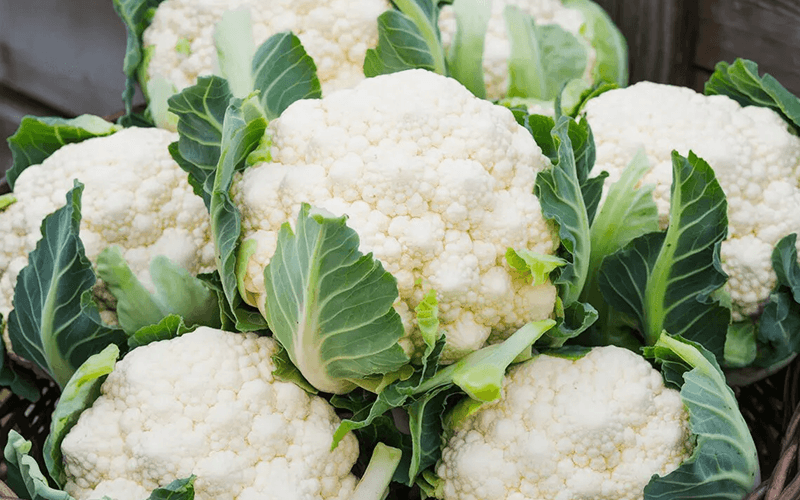
Cauliflower Export from India Premium Fresh Cauliflower Wholesale Supplier
Fresh cauliflower (Brassica oleracea var. botrytis) has become one of the most in-demand vegetables in world trade. Health-conscious consumers, low-carb food trends and the global popularity of dishes from roasted cauliflower steaks to cauliflower rice have pushed white curds to the centre of modern menus. India, the world’s second-largest producer of cauliflower behind China, grows around 9.6–9.8 million tonnes a year (National Horticulture Board, 2023–24) yet ships out only a sliver of that volume. For importers, distributors and processors looking beyond the usual sources, that is exactly where the opportunity lies.
As an established Indian exporter, wholesaler and supplier of fresh vegetables, Sardar Market manages the entire chain ourselves from direct farm-contract sourcing in India’s leading cauliflower belts, through strict packing-house sorting, to forced-air pre-cooling and refrigerated container logistics. Partner with us and you get a fresh, high-quality, continuous supply of Indian cauliflower tailored to your country’s import regulations and packaging demands, all under one accountable roof.
Market Potential & Supply Capacity
India’s horticulture sector is recognised worldwide for its scale, and we are positioned to meet the high-volume demands of international markets.
- Production strength: India is the world’s second-largest producer of cauliflower and broccoli (behind China), contributing roughly a third of global output of about 26.5 million tonnes (FAOSTAT). India’s 2023–24 cauliflower harvest stood at about 9,661 kilotonnes (National Horticulture Board). This vast domestic supply lets us secure export-grade curds even outside the main season.
- Where our cauliflower goes today: Our current trade flows are anchored in South Asia Nepal is the top destination by volume, followed by Bhutan, while the Maldives pays the highest price per kilogram. In 2024, India exported about 1,175 tonnes of fresh cauliflower worth roughly USD 407,000 under HS Code 0704.10 (UN Comtrade), growing more than 50% in volume year-on-year. Notably, we also shipped premium air-freight lots to the United States and Japan.
- Where the growth is: The United States is one of the largest and highest-value import markets for cauliflower and broccoli, and the UK–EU demand base is strong for clean, compact white curds. With the India–UK trade agreement now in force, Gulf buyers, and fast-growing retail chains in Singapore and Malaysia, we see clear headroom for Indian cauliflower beyond our neighbourhood markets.
- Custom volume delivery: We cater to diverse buyer profiles. While we specialise in high-volume, ocean-freight containerised shipping, we also manage customised high-frequency air-freight orders for premium retail buyers in urban markets who prefer smaller, compact curds delivered on tight schedules.
Our Sourcing Network & Harvesting Seasons
Cauliflower is a cool-season crop, and India grows it in a rotating pattern of regions so that fresh curds are available in almost every month of the year. We source from the states that matter most for production not just the ones closest to our port.
Strategic Sourcing Clusters
- West Bengal & Madhya Pradesh: The two largest cauliflower-producing states in India, together responsible for over a third of national output. Bengal’s Nadia, 24 Parganas and Hooghly districts, and MP’s Indore belt, give us the volume backbone for the main winter crop.
- Bihar: India’s third-largest producer (Samastipur belt). A high-volume winter sourcing hub with consistently dense, well-formed curds.
- Gujarat & Maharashtra: Gujarat ranks fourth in national cauliflower production (Mehsana, Kheda) and gives us prompt logistics connections to the western seaports Nhava Sheva and Mundra for rapid container loading. Maharashtra adds balance from the central-western belt.
- Punjab & Haryana: Productive northern plains producing large, compact, processing-grade curds (Gurdaspur, Jalandhar, Sonipat) ideal for industrial buyers.
- Odisha & Karnataka: Southern and eastern sourcing points (Sundargarh, Ganjam) that help us bridge seasonal gaps.
- Hill belts (Uttarakhand, Himachal Pradesh): High-altitude regions that let us source premium, cold-hardy cauliflower during the summer when the plains are too hot.
Year-Round Sowing & Harvesting Calendar
By rotating sourcing across these regions, we maintain a highly consistent supply calendar:
| Crop | Sowing Period | Harvesting Period | Sourcing States | Peak Sourcing Months |
| Early Crop | May – June | July – September | Uttarakhand, Himachal Pradesh, early-variety belts | August |
| Main Crop | August – October | November – February | West Bengal, Madhya Pradesh, Bihar, Gujarat, Punjab, Haryana | January |
| Late / Summer Crop | November – January | February – May | Odisha, Maharashtra, Karnataka, hilly zones | April |
Indian Cauliflower Varieties We Supply
We supply open-pollinated and hybrid cauliflower cultivars chosen for their curd density, snow-white colour, and structural resilience during transit.
1. Pusa Deepali (Early Season Standard)
An early-maturing IARI variety that produces medium-sized, highly compact, snow-white curds. The plants are self-blanching the inner leaves naturally fold over and protect the curd from sunlight which prevents yellowing and ensures a clean, attractive appearance. A dependable choice for early-season retail programs.
2. Early Kunwari
A very early season cultivar recommended for early autumn shipments. It features semi-compact, hemispherical, attractive white curds. Its prompt maturity lets us kickstart export programs ahead of the main winter crop.
3. Punjab Giant-26
A main-season PAU variety characterised by robust, solid, and highly attractive white curds. Its high density and heavy weight make it the perfect variety for commercial food distributors and institutional catering suppliers.
4. Pant Shubhra
An early-to-mid season variety from Pantnagar that produces creamish-white, compact, and slightly conical curds. It has excellent resistance to curd browning and bacterial rot, ensuring a pristine appearance on arrival.
5. Dania Kalimpong (Late / Hilly Zone Variety)
Grown in the cool, high-altitude regions, this variety is highly stress-tolerant. It produces firm, medium-sized, snow-white curds that remain fresh and retain their crisp texture for extended periods, making it ideal for long-distance maritime shipments.
Technical Specifications & Quality Standards
Every batch of cauliflower processed in our facilities undergoes strict sorting and grading to comply with international B2B quality standards.
Our B2B Quality Parameters
| Parameter | Specification |
| Size (diameter of curd) | Small (retail / bite-size): 10–15 cm; Medium (standard export grade): 15–20 cm; Large (industrial processing): 20–25 cm |
| Curd appearance | Compact, tight and uniform snow-white to cream-white colour. No loose florets or granular (“ricey”) surface. |
| Wrapper leaves | Curds are trimmed leaving a collar of healthy, green wrapper leaves. These leaves protect the delicate curd surface from bruising and drying during ocean shipping. |
| Defect tolerance | Maximum 1.5% to 2% cumulative tolerance for minor surface rubs or slight shape variations. Zero tolerance for insect infestation, black rot, fungal spots, mechanical cuts, or decay. |
| Maximum Residue Limits (MRLs) | We strictly adhere to the food-safety requirements of target destination markets. Consignments undergo chemical residue analysis at APEDA-accredited / NABL laboratories to verify compliance. |
Our Post-Harvest Handling & Quality Assurance Steps
Cauliflower is a highly perishable crop that transpires rapidly. We enforce rigorous post-harvest practices to prevent weight loss, yellowing, and floret softening.
- Morning harvesting: Curds are hand-cut in the cool early-morning hours to minimise field heat. We leave a long stalk and surrounding leaves intact.
- Sorting & trimming: Curds are inspected and graded by size and density. The stalk is trimmed close to the leaf base, leaving a protective ring of leaves.
- Pathogen prevention: Curds are kept dry. We do not water-wash unless high-speed air-drying can be guaranteed, because moisture trapped between florets is the primary cause of bacterial soft rot during transit.
- Forced-air pre-cooling: Crated curds are placed in pre-cooling chambers within hours of harvest to bring the core temperature down to 0°C. This step dramatically slows respiration and preserves freshness. (For premium programs, hydro-cooling is available on request.)
- B2B packaging: Curds are packed securely into protective containers (see packaging options below).
Packaging Specifications
To prevent crushing and ensure ideal air circulation, we offer two main packing options:
| Option | Description |
| Ventilated corrugated cartons | Export-grade corrugated cardboard cartons with ventilation holes. Preferred for air freight and premium retail programs, where individual curds are separated with protective liners for a pristine, shelf-ready finish. |
| Ventilated plastic crates / heavy-duty cartons | Reusable ventilated plastic crates or heavy-duty export cartons for ocean freight. Curds are packed head-to-head with cushioning material to absorb shock and allow even airflow through the pallet load. |
Cold Chain Logistics & Shipping Safety
Maintaining a constant, uninterrupted cold chain is essential to preserve curd colour and texture.
Reefer Container Parameters
For ocean shipping, we load cauliflower into refrigerated (reefer) containers set to these parameters:
| Parameter | Setting |
| Temperature set point | 0°C to 1°C (target 0°C) |
| Relative humidity | 90–98% |
| Air circulation | Container vents open and airflow set per carrier protocol to remove respiratory heat |
| Pre-cooling before loading | Core temperature brought down to approx. 0°C before container stuffing |
Important: Keeping the temperature above 2°C accelerates metabolic activity, causing the curds to turn yellow, develop brown spots, and rot. Conversely, keeping the temperature below about –0.8°C risks freezing injury, which breaks down the cell walls and leads to rapid decay upon thawing. The 0°C to 1°C band protects the delicate curd structure across both limits.
Temperature Data Loggers (Cargo Protection)
We place independent, digital temperature data loggers inside every reefer container to continuously record transit temperature and humidity. This gives our B2B clients transparent, verifiable proof of cold-chain integrity and supports insurance claims in the rare event of carrier equipment failure.
Transit Times From Our Ports
| Route | Approx. Transit Time |
| Mundra or Nhava Sheva → Gulf ports (e.g., Jebel Ali, Dubai) | 5–7 days |
| Mundra or Nhava Sheva → UK ports | 12–14 days |
Transit times depend on the sailing schedule and can vary; we confirm exact routings at the time of booking.
Export Compliance & Quality Certifications
We manage all customs and agricultural clearance protocols in India, ensuring a seamless documentation process for our international buyers.
Essential Documentation Checklist
We provide the following documents with every shipment:
- Import Export Code (IEC): Issued by the Directorate General of Foreign Trade (DGFT).
- APEDA RCMC: Authorising us as a certified exporter of fresh agricultural products.
- Phytosanitary Certificate: Issued by quarantine officials, confirming the shipment is free of agricultural pests.
- Certificate of Origin: Confirming Indian origin to facilitate preferential tariff clearance where an applicable trade agreement covers the product.
- Residue Test Reports: From APEDA-accredited / NABL laboratories confirming MRL compliance for the destination market.
- SGS / Intertek Quality Report: Verifying quality grades and pesticide residue levels (upon buyer request).
- Commercial Invoice & Packing List: Detailing exact net weights, variety, and packaging dimensions.
- Bill of Lading (B/L) / Airway Bill: The official shipping contract of carriage.
Note on 2026 tariff code alignment: Following the DGFT’s alignment of the ITC(HS) 2022 Schedule with the Finance Act, 2026 (Notification No. 24/2026-27, dated 22 July 2026), exporters should always confirm the precise 8-digit tariff item in the current ITC(HS) schedule before filing. Fresh cauliflower continues to be classified under heading 0704.
Our Secure B2B Payment Terms & Policy
To guarantee business continuity and commit the necessary resources to quality assurance and harvesting logistics, we operate strictly on secure payment structures. We do not export on credit, consignment, or open accounts.
The Risks of Consignment / Credit Trade
Consignment sales (common in some Middle Eastern wholesale markets) expose suppliers to high payment risks, delayed settlements, and unsubstantiated claims of cargo damage. To protect our agricultural partnerships, we maintain secure B2B transaction models.
Accepted Payment Structures
- 30% advance + 70% against shipping documents: 30% advance Telegraphic Transfer (T/T) to initiate sourcing, grading, and pre-cooling, with the remaining 70% paid against scanned copies of the Bill of Lading (B/L) and export documents.
- Confirmed, irrevocable Letter of Credit (L/C) at sight: Accepted for established contract buyers and high-volume seasonal shipping programs.
Why Partner with Us for Indian Cauliflower Sourcing?
- Farm-direct procurement across India’s top cauliflower belts with year-round availability.
- Strict sorting, grading and pre-cooling under one accountable roof.
- Reefer-container shipping with independent temperature data loggers for verifiable cold-chain integrity.
- Complete export documentation IEC, APEDA RCMC, phytosanitary certificates and residue test reports.
- Secure payment terms that protect both buyer and supplier.
- Competitive FOB/CIF pricing with a quotation desk that responds within 24 hours.
Market Trends Reshaping Cauliflower Trade in 2026
1. The India–UK Trade Agreement Is Now Live
The India–UK Comprehensive Economic and Trade Agreement (CETA) signed in London on 24 July 2025 entered into force on 15 July 2026. The UK has granted zero-duty access on nearly 99% of India’s exports, and the Indian government expects the agreement to strengthen exports of fresh and chilled vegetables and place Indian agricultural products on par with major EU exporters. On India’s side, sensitive agricultural items including vegetables remain protected from tariff reductions. This is the most comprehensive trade deal India has brought into force with a G-7 economy.
2. The Health-Food Wave Is Lifting Cauliflower
Cauliflower has ridden a global low-carb and plant-forward food movement for several years from cauliflower rice and pizza crusts to buffalo bites and roasted steaks. This has steadily raised demand in North America and Europe, where buyers increasingly want clean, compact, snow-white curds of consistent grade, which is exactly the product we grade and pack.
3. The Gulf Is the Next Frontier
India already supplies the UAE through the India–UAE CEPA (in force since May 2022), and the India–Oman CEPA came into force on 1 June 2026. An India–GCC Free Trade Agreement covering Saudi Arabia, Qatar, Kuwait, Oman and Bahrain is under active negotiation a Joint Statement formally launching negotiations was signed in February 2026, with a target conclusion in 2026 which would further ease market access for Indian cauliflower in the region.
4. Diversifying Away From a Single Market
Indian agricultural exports grew by roughly 2–3% year-on-year in 2025–26 to about US$53 billion, despite tariff measures introduced by the US during the year. Fresh fruit and vegetable exports continued to perform, and the market base is broadening well beyond traditional neighbours.
5. Stronger Cold Chain Infrastructure
APEDA and the Ministry of Agriculture are actively developing sea-transport protocols for horticulture, and government support continues through the RoDTEP scheme, Duty Drawback, and financial assistance for pack houses, pre-cooling units and cold chains. India’s target of US$100 billion in agricultural exports by 2030 (with APEDA targeting US$55 billion of that) keeps investment flowing into the cold-chain infrastructure our cauliflower depends on.
Place Your Wholesale Order with India’s Trusted Cauliflower Supplier
Secure a reliable, high-quality agricultural supply chain with a premier fresh cauliflower exporter. We combine agricultural expertise, state-of-the-art cold-chain facilities, and seamless export compliance to deliver premium fresh produce directly to your port.
Request a wholesale quote today. Our B2B export desk will coordinate with you to provide customised FOB or CIF pricing for your port within 24 hours.
Sources & Verification Notes
Key figures on this page were verified against the following sources: India’s cauliflower production of about 9,661 kilotonnes in 2023–24 and state-wise rankings National Horticulture Board and published state statistics (West Bengal 20.7%, Madhya Pradesh 15.1%, Bihar 11.6%, Gujarat 8.1%); India’s position as the world’s second-largest producer and world output of about 26.5 million tonnes FAOSTAT via Horticultural Statistics at a Glance; India’s 2024 cauliflower exports of about 1,175 tonnes (USD 407,000) and destination split under HS 0704.10 UN Comtrade / WITS; the India–UK CETA (in force 15 July 2026), India–UAE CEPA (May 2022) and India–Oman CEPA (June 2026) GOV.UK and PIB; the India–GCC FTA negotiation launch (February 2026) PIB/ET; FY 2025–26 agri-export value of about US$53 billion and the US$100 billion / US$55 billion export targets Ministry of Commerce & APEDA; and DGFT Notification No. 24/2026-27 (22 July 2026) on ITC(HS) alignment with the Finance Act, 2026. Cold-chain temperature guidance follows standard post-harvest references for cauliflower (storage at 0°C, 90–98% RH, freezing point around –0.8°C).