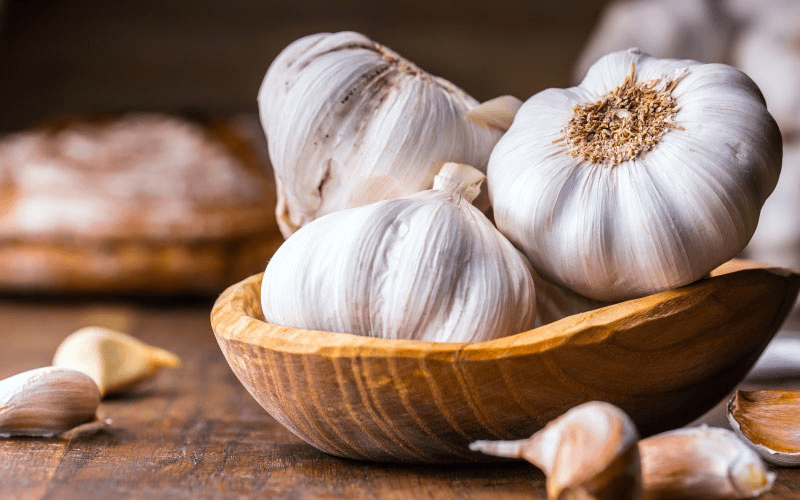
India is the world’s second-largest producer of garlic, harvesting around 3.2 million tonnes a year roughly 6% of global output, behind only China (FAOSTAT / UN Comtrade data, 2023). Indian garlic is prized in international markets for its firm bulbs, high pungency and excellent storage life, and it is now a practical, price-competitive alternative to Chinese garlic for buyers across Asia, the Gulf, North America and Europe.
Based in Surat, Gujarat, Sardar Vegetable Market is an established Indian exporter, wholesaler and supplier of fresh vegetables. We source premium-grade fresh garlic directly from the best progressive farms in Gujarat and the country’s leading garlic belts in Madhya Pradesh and Rajasthan, ensuring consistent size, rich pungency and dependable volume for bulk global buyers.
We specialise in exporting fresh, clean, high-grade garlic bulbs to international markets. Our supply chain from field curing to grading, packaging and dispatch ensures the product reaches your port undamaged, properly cured and sorted to meet international packaging and quality standards.
Key Benefits of Sourcing Indian Garlic
Garlic is one of the few fresh vegetables that is genuinely sea-freight friendly: a well-cured bulb keeps for six to nine months under proper refrigeration, which gives Indian exporters a decisive logistics advantage over perishable produce. Here is what Indian garlic offers a B2B buyer.
- High pungency and flavour: Indian varieties are known for their strong, sharp flavour and high allicin (pyruvic acid) content the chemical marker of garlic pungency which is exactly what processors and ethnic-food buyers look for.
- Long storage life: Properly cured garlic stores 6–9 months at 0°C with 60–70% relative humidity, so bulk buyers can secure volume at harvest and release it through the year without quality loss.
- Year-round availability: Garlic is a short-duration rabi (winter) crop, but because cured bulbs store so well, Indian supply is continuous through the year not limited to the harvest months.
- Competitive pricing: Indian garlic consistently undercuts Chinese garlic on landed cost in many regional markets while matching it on pungency and firmness.
- Dependable scale: With production spread across Madhya Pradesh, Rajasthan, Uttar Pradesh and Gujarat, Indian exporters can fill repeat, high-volume programmes without supply gaps.
- Quality control: We grade by bulb size, clove count, curing and dryness, and ship only uniform, well-cured bulbs the profile premium markets in the Gulf, Southeast Asia and the USA pay for.
Why Choose India?
Indian soil and climate are well suited to garlic cultivation, and the crop is now grown on a very large scale across central and western India. Two states alone Madhya Pradesh and Rajasthan account for roughly 78% of national output, giving Indian exporters a deep, concentrated supply base.
- Production leadership: India is the world’s number-two garlic producer (about 3.2 million tonnes in 2023), and Indian production has been growing faster than China’s in recent years.
- Flavour profile: Indian garlic offers the pungency and firmness that processing industries and diaspora kitchens prefer, plus attractive white, creamy and purple-skinned bulb types.
- Excellent shelf life: Well-cured Indian garlic holds for months under refrigeration the key reason it travels comfortably by sea container to Gulf, Southeast Asian and European ports.
- Round-the-year supply: While garlic is a winter-sown crop, stored, well-cured produce keeps the market supplied all year so importers are not dependent on a single harvest window.
- Buyer confidence: As global buyers diversify away from over-reliance on Chinese supply, documented Indian origins with residue testing, phytosanitary certification and traceability are winning shelf space in premium retail and organic programmes.
Indian Garlic Varieties We Supply
We select Indian varieties that combine pungency, firmness and keeping quality. These are the types we ship most often, along with the size profile each market prefers.
1. Yamuna Safed-3 (G-282) Export Favourite
A creamy-white variety with bigger bulbs (4.5–5.5 cm diameter) and fewer, larger cloves (15–16 per bulb). Developed by NHRDF and notified for cultivation across Madhya Pradesh, Maharashtra, Haryana, Gujarat, Punjab, Rajasthan, Uttar Pradesh and Chhattisgarh, it is specifically noted by ICAR-DOGR as suitable for export because of its large cloves the profile Gulf and US buyers prefer.
2. Yamuna Safed (G-1) & Yamuna Safed-2 (G-50)
Yamuna Safed (G-1) produces compact, silvery-white bulbs of 4.0–4.5 cm with 25–30 cloves and is notified for cultivation all over India. Yamuna Safed-2 (G-50) is a northern-India variety with attractive white bulbs of 3.5–4.0 cm and 35–40 cloves. Both are reliable, widely available workhorses for steady volume programmes.
3. Agrifound White (G-41)
A white-skinned variety from NHRDF recommended for Madhya Pradesh and Maharashtra, with good clove size and a high dry-matter content that suits both fresh-table and processing markets.
4. Bhima Purple
A distinctive purple-skinned variety developed by ICAR-DOGR (maturing in 120–135 days). Its attractive colour makes it a strong specialty line for premium, gourmet and organic retail buyers in Europe and North America.
Our Sourcing Network & Harvesting Seasons
Garlic is a rabi (winter) crop in India: sown from around October to November and harvested from late February through May, with regional windows that let us buy new crop from several belts. After that, well-cured stored bulbs carry the year.
Strategic Sourcing Clusters
Our procurement teams work directly with farmers and farmer producer organisations (FPOs) across India’s main garlic belts:
- Madhya Pradesh (Mandsaur–Neemuch belt): India’s number-one garlic state, contributing roughly 60% of national output. The Mandsaur–Neemuch cluster is the country’s wholesale reference point for garlic, and our primary source for Yamuna Safed-3 and Agrifound White.
- Rajasthan: India’s second-largest garlic state (≈17% of output), adding volume and a slightly different size profile for Gulf and Southeast Asian buyers.
- Gujarat (our home base): The fourth-largest garlic-producing state, with short hauls to the Mundra, Kandla and Nhava Sheva corridors. Gujarat’s own production (about 105,000–125,000 tonnes a year in recent seasons) plus rail access to MP and Rajasthan make Surat a natural garlic hub.
- Uttar Pradesh & Punjab: Supplementary northern belts that extend the new-crop window into April–May and support stored-supply programmes through the year.
Harvesting & Supply Calendar
New-crop arrivals run roughly February to May, with stored, well-cured supply covering the rest of the year:
| Sourcing Cluster | New-Crop Window | Notes |
| Gujarat (central & Saurashtra belts) | February – April | India’s 4th-largest producer; short haul to Mundra & Kandla |
| Madhya Pradesh (Mandsaur–Neemuch) | February – May | India’s No. 1 state (≈60% of output); wholesale reference hub |
| Rajasthan | March – April | No. 2 producer (≈17%); volume for Gulf & Southeast Asia |
| Uttar Pradesh & Punjab | April – May | Northern belts extending the new-crop window |
| Stored, well-cured supply | June – January | Year-round availability via long-life cold storage |
These are indicative windows. Because cured garlic stores 6–9 months, we can supply export-grade bulbs in every month of the year.
Production Hubs & Trade Details
Major Producing States
India’s garlic production is concentrated in central and western India. The leading states, by production share, are:
- Madhya Pradesh India’s largest producer (≈60% of national output; Mandsaur–Neemuch is the core belt).
- Rajasthan second-largest (≈17% of output).
- Uttar Pradesh third-largest (≈7% of output).
- Gujarat fourth-largest (about 105,000–125,000 tonnes in recent seasons), with rising yields and strong export logistics.
- Punjab, Assam, Haryana & West Bengal smaller but significant contributors that add seasonal flexibility.
Major Wholesale Markets
- New Sardar Vegetable Market, Surat, Gujarat our home mandi and a key wholesale hub for fresh vegetables in western India.
- Mandsaur–Neemuch mandi, Madhya Pradesh the country’s reference wholesale market for garlic, used as the daily price benchmark.
- Nashik, Maharashtra & Lasalgaon-style terminal markets regional aggregators for onward rail and road movement to ports.
Quality Standards & Sourcing
Our fresh garlic undergoes strict sorting, cleaning and quality checks. We discard any damaged or sub-par bulbs, ensuring only uniform size, solid structure and properly cured, high-quality garlic is packed and shipped.
Our B2B Quality Parameters
| Parameter | Specification |
| Bulb size – Small | Under 40 mm diameter (regional / processing markets) |
| Bulb size – Medium (standard export) | 40–50 mm diameter (Gulf & Southeast Asia) |
| Bulb size – Large / Jumbo | 50 mm and above (USA, Europe, premium retail; e.g. Yamuna Safed-3 at 45–55 mm) |
| Bulb condition | Firm, solid bulbs; dry, parchment-like outer skins; dry neck after proper curing |
| Colour | Uniform white / creamy white, or purple for Bhima Purple lines |
| Defect tolerance | Maximum 1.5–2% cumulative tolerance for minor blemishes; zero tolerance for mould, sprouting, root growth, wet bulbs or decay |
| Dry matter & pungency | High dry matter (38–42%) and high pyruvic-acid / allicin content typical of Indian varieties |
| Maximum Residue Limits (MRLs) | Residue-tested at APEDA-accredited / NABL laboratories before shipment, in line with each destination country’s limits |
Exact grades, tolerances and bulb-size ranges are set in the contract or specification sheet for each shipment and confirmed before packing.
Direct Sourcing
We source directly from progressive local farmers across the Surat region and partner belts in Madhya Pradesh and Rajasthan, ensuring fresh daily arrivals with minimal delay. This direct sourcing model gives us traceability back to the farm, control over curing and grading, and the volume security that long-term export programmes require.
Our Export Process
From farm to your port, our garlic programme follows a disciplined, documented process:
Our Quality Assurance Steps
- Sourcing directly from farms or local mandi arrivals, with farm-level pre-checks for variety and maturity.
- Manual sorting, grading and washing, with every bulb checked for firmness, curing and freedom from defects.
- Quality verification against the shipment specification, including size grading and dry-matter checks.
- Packaging in ventilated plastic crates or cardboard cartons (and mesh bags for bulk programmes).
- Cold-chain logistics with customs clearance and export documentation handled in India.
- Global shipment via air cargo or sea containers, with temperature loggers on refrigerated moves.
Important: Curing is the foundation of garlic quality. Bulbs that are not fully cured with dry neck and dry, parchment-like outer skins will mould and decay even in cold storage. We only pack well-cured bulbs, which is why our consignments arrive firm and bright.
Cold Chain Logistics & Shipping Safety
Unlike most fresh vegetables, garlic is a long-storage commodity. Because it keeps for months when handled correctly, it travels comfortably by sea container giving buyers a low-cost freight option that fresh tomatoes, okra or drumsticks simply do not have.
Reefer Container Parameters
For ocean shipping, we use refrigerated (reefer) containers set to these parameters:
| Parameter | Setting |
| Set point | 0°C to −1°C (0°C recommended; some handlers use −2°C to 0°C) |
| Relative humidity | 60–70% |
| Ventilation | Closed / low; ensure good airflow around bulbs to prevent moisture accumulation |
| Storage life | 6–9 months for well-cured bulbs |
| Avoid | 5°C–18°C range (rapid sprouting); humidity above 70% (mould and root growth) |
Exact set points are confirmed per shipment based on route, season and packaging. Garlic is not chilling-sensitive and can hold near its freezing point without injury.
Warning: Humidity is the enemy of stored garlic. Above about 70% relative humidity, bulbs start to mould, root and sprout; and storing at 5°C–18°C triggers rapid internal sprouting. We hold the sweet spot 0°C and 60–70% RH with ventilation so bulbs stay firm and dormant for the whole voyage.
Temperature Data Loggers
Independent digital temperature loggers inside every container record temperature and humidity at regular intervals for the whole voyage. The log is documented proof of the cold chain and the primary evidence for insurance claims or shipping-line compensation in the rare event of equipment failure.
Transit Times From Our Ports
From Mundra, Kandla or Nhava Sheva by sea: roughly 5–7 days to Gulf ports such as Jebel Ali (Dubai) and Doha, around 8–10 days to Singapore and Southeast Asia, and 16–19 days to the UK. Because garlic stores for months, these sea routes are the economical default. For premium organic or urgent orders we offer air freight from Mumbai, which reaches the Gulf in 1–3 days and the UK in 3–5 days. Actual transit times vary with the carrier’s schedule and routing.
Export Compliance & Certifications
We handle customs clearance and export compliance in India so your shipment arrives without surprises.
Export Policy for Garlic
Fresh garlic is freely exportable under the current Foreign Trade Policy there is no export licensing or quota restriction. What the trade does require is proper documentation, residue compliance and, for many destinations, a phytosanitary certificate.
HS / HSN Classification
| Product form | HS / HSN heading | Typical 8-digit lines |
| Fresh or chilled garlic bulbs | 0703.20 garlic, fresh or chilled | 07032000 |
| Dried garlic (flakes / powder) | 0712.90.20 dried vegetables, garlic | 07129020 |
| Peeled fresh garlic cloves | 0703.20 garlic, fresh or chilled | 07032000 |
Classify by the exact product form shipped and confirm the current 8-digit tariff item in the ITC(HS) schedule before filing (see tariff note below).
Essential Documentation Checklist
Every garlic shipment ships with a full document set:
- Import Export Code (IEC): Issued by the Directorate General of Foreign Trade (DGFT).
- APEDA Registration (RCMC): Registration-cum-Membership with APEDA, required for fresh vegetable exports.
- FSSAI License: Food Safety and Standards Authority of India registration.
- Phytosanitary Certificate: Issued by the Directorate of Plant Protection, Quarantine & Storage (DPPQS), confirming the consignment is free of quarantine pests.
- Residue Test Reports: From APEDA-accredited / NABL laboratories, confirming MRL compliance for the destination country.
- SGS / Intertek Quality Report: Pre-shipment inspection and residue analysis upon buyer request.
- Certificate of Origin: Required to claim preferential tariff benefits where they apply.
- Commercial Invoice & Packing List: Fully itemised commercial documents.
- Bill of Lading (B/L) / Airway Bill: The contract of carriage for the shipment.
Note on 2026 tariff code alignment: Following the DGFT’s July 2026 harmonisation of the ITC(HS) 2022 Schedule with the Finance Act 2026 (Notifications No. 24/2026-27 for the import policy schedule and No. 26/2026-27 for the export policy schedule), exporters should always confirm the precise 8-digit tariff item in the current ITC(HS) schedule before filing. Fresh garlic continues to be classified under heading 0703 (HS 0703.20), with dried garlic under 0712.90.20.
Market Price & Wholesale Inquiries
Garlic is one of the most price-volatile commodities in Indian horticulture farm-gate and mandi prices swing sharply with arrivals, season and Chinese supply. That is why we publish no static price here. We quote competitive wholesale mandi rates updated daily on Surat market trends, benchmarked against the Mandsaur–Neemuch reference mandi.
Indicative FOB Export Range
As a planning guide only, recent trade literature places indicative FOB levels for Indian garlic at roughly US$0.8–1.2/kg for 40–50 mm bulbs and US$1.2–1.8/kg for large 50 mm+ and premium grades, with organic-certified lines higher. Actual export prices depend heavily on season, grade, destination and freight please request a live quote for today’s rate.
How to Request Today’s Live Rate
- Contact our export desk with your destination port, required size grade, variety (white, purple or organic), packaging and volume.
- We respond with a customised FOB or CIF quote within 24 hours, based on the current Surat and Mandsaur–Neemuch mandi rates.
Market Trends Reshaping Garlic Trade in 2026
1. China Dominates Volume But Buyers Are Diversifying
China accounts for roughly 70–72% of world garlic production and the bulk of global exports. India, the number-two producer, has historically exported only a small share of its crop around 1% of output in 2020-21. But when Chinese supply tightens, buyers turn to India quickly: Indian garlic exports jumped about 110% in volume in the first half of 2023-24, and rose roughly 30% in volume to about 37,000 tonnes in April–January 2025-26. The lesson for importers is that Indian origin is now a proven, dependable second source.
2. Who Buys Indian Garlic Today
In 2024, India’s fresh-garlic exports (about US$6.6 million across roughly 6,000 tonnes) went mainly to Bangladesh, Malaysia, the UAE, the United States and Bhutan (UN Comtrade). Southeast Asia and the Gulf are the steady volume base, while the USA and the EU pay premiums for organic and large-clove specialty lines exactly the segments where a documented, residue-clean Indian chain competes best.
3. The India-UK CETA With a Nuance for Garlic
The India-UK CETA, in force since 15 July 2026, removed duties on roughly 99% of Indian tariff lines, including most fresh vegetables. One nuance applies to garlic specifically: garlic sits on India’s own sensitive list, meaning India has not extended tariff concessions on garlic imports but that protects the Indian domestic market rather than restricting Indian garlic exports to the UK. Buyers should still confirm the current UK tariff treatment for HS 0703.20 before quoting.
4. The Gulf & the India-UAE CEPA
The UAE is already a top-five destination for Indian fresh garlic, and Indian produce enters under the India-UAE CEPA (in force since May 2022). An India-GCC Free Trade Agreement covering Saudi Arabia, Qatar, Kuwait, Oman and Bahrain is under negotiation with a target conclusion in 2026 which would ease access further into the largest diaspora-driven volume market.
5. The Road to US$100 Billion
India has set an ambitious target of US$100 billion in agricultural exports by 2030 (with APEDA targeting US$55 billion of that), against 2025-26 agri exports of about US$53.1 billion. Garlic and its value-added forms (flakes, powder) sit squarely within this push, supported by RoDTEP incentives, Duty Drawback and government assistance for pack houses and cold-chain infrastructure.
Our Secure B2B Payment Terms & Policy
We operate on secure, documented payment methods only. We do not export on credit, consignment or commission.
The Risks of Consignment/Credit Trade
Operating on consignment common in GCC wholesale markets exposes a supplier to delayed payments, heavy deductions and arbitrary price reductions based on alleged cargo damage. We avoid this exposure entirely by insisting on secure payment structures.
Accepted Payment Structures
- 30% Advance + 70% Against Shipping Documents: A 30% advance (T/T) to begin sourcing and packing, with the balance paid against scanned copies of the Bill of Lading and shipping documents.
- Confirmed, Irrevocable Letter of Credit (L/C) at Sight: Accepted for contract-based, high-volume shipment programmes.
Why Partner with Sardar Vegetable Market for Indian Garlic Sourcing?
Choosing us as your B2B garlic supplier means working with a team that handles the whole chain:
- Direct sourcing from Gujarat’s farms and India’s leading garlic belts in Madhya Pradesh and Rajasthan.
- Strict bulb-size, curing and dry-matter grading against your specification sheet.
- Well-cured bulbs and a disciplined 0°C cold chain from packhouse to discharge at your port.
- Documented residue testing and full farm-to-packhouse traceability.
- Complete export documentation, HS classification and customs clearance handled in India.
- Sea-freight economics garlic’s long storage life means low-cost container shipping instead of expensive air freight.
- Secure, documented payment terms no credit, consignment or commission risk.
- Customised FOB or CIF quotes delivered within 24 hours.
Place Your Wholesale Order with India’s Trusted Garlic Supplier
Whether you run a supermarket chain, wholesale market, food-processing unit or ethnic-food importer, Sardar Vegetable Market offers a reliable, high-quality supply of fresh Indian garlic at competitive prices. From farm-direct sourcing in Gujarat and the Mandsaur–Neemuch belt to well-cured bulbs and 0°C cold-chain delivery at your port, we make garlic exports simple.
Request a Wholesale Quote today. Our B2B export desk will provide customised FOB or CIF pricing for your port based on today’s Surat mandi rates within 24 hours.
Frequently Asked Questions (B2B Garlic Export)
Q1. What is the HS Code for exporting fresh garlic from India?
Fresh or chilled garlic bulbs are exported under HS Code 0703.20 (8-digit line 07032000). Dried garlic flakes and powder move under 0712.90.20. Always confirm the current 8-digit tariff item in the ITC(HS) schedule before filing.
Q2. What is your Minimum Order Quantity (MOQ) for garlic shipments?
Our standard MOQ for ocean freight is one 20-foot or 40-foot refrigerated (reefer) container. A 20-foot reefer carries roughly 18–20 tonnes of packed garlic depending on packaging, and a 40-foot reefer about 25–27 tonnes. For air-freight and specialty (organic, purple) orders we accept smaller custom volumes.
Q3. Do you ship garlic by sea or by air?
By sea, almost always. Garlic is one of the few fresh vegetables that stores for months, so the economical 16–19 day route to the UK or 5–7 day route to the Gulf works perfectly. We use air freight only for urgent, premium or organic orders.
Q4. Why is garlic sea-friendly when other fresh vegetables are not?
Because a well-cured garlic bulb keeps 6–9 months at 0°C with 60–70% relative humidity, versus days for leafy vegetables. That long storage life is what makes low-cost container shipping possible without quality loss.
Q5. What is the shelf life of your exported garlic?
Properly cured garlic holds 6–9 months under correct refrigeration (0°C, 60–70% RH, ventilated), and 1–2 months at ambient temperature in low humidity. It should never be stored in the 5–18°C range, where it sprouts rapidly.
Q6. Can we customise the packaging and bulb-size grade?
Yes. We supply garlic in ventilated plastic crates, cardboard cartons and mesh bags in standard and custom weights (e.g. 1 kg, 5 kg, 10 kg, 25 kg), branded with your details, and graded by bulb size (under 40 mm, 40–50 mm, 50 mm+) to your specification.
Q7. Do you export garlic on a commission or credit basis to Dubai or Malaysia?
No. We do not export on a commission, consignment or credit basis. Every shipment runs on secure advance T/T or an irrevocable L/C at sight.
Q8. What is the CETA position for garlic going to the UK?
Garlic sits on India’s own sensitive list, which means India has not extended tariff concessions on garlic imports a protection for the domestic market, not a restriction on Indian exports. The UK removed duties on roughly 99% of Indian tariff lines; buyers should still confirm the current UK tariff treatment for HS 0703.20 before quoting.
Q9. How does Indian garlic compare with Chinese garlic?
Indian garlic is generally firmer and higher in pungency (allicin/pyruvic-acid content), with a shorter global supply history but increasingly dependable volumes and competitive pricing. As buyers diversify away from single-source dependence, documented Indian origin is becoming a standard second source.
Q10. How do we get a CIF price quote for our target port?
Contact our export desk with your destination port, required size grade, variety, packaging and volume. We will send a detailed CIF quote based on today’s Surat and Mandsaur–Neemuch mandi rates within 24 hours.