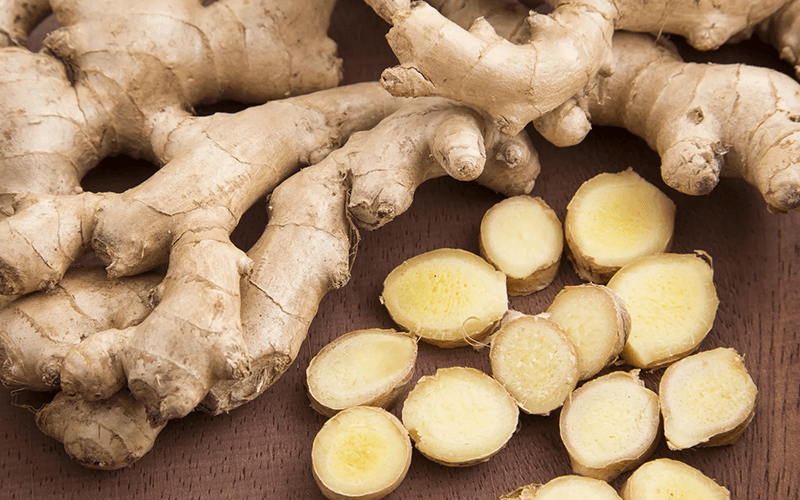
We are a Surat-based fresh vegetable exporter specialising in the worldwide export of premium fresh ginger root. Ginger (Zingiber officinale) is one of the most widely traded and valued spices in the world, prized for its pungent aroma, sharp flavour and long culinary history. We source clean, firm, high-grade ginger rhizomes directly from progressive farms and major producing belts across India and deliver them to bulk buyers worldwide.
Our supply chain is built around one simple promise: ginger that is fresh, clean and uniformly graded, harvested at the right maturity and packed to meet international quality, phytosanitary and packaging standards, delivered consistently, shipment after shipment.
About Ginger Export from India
Ginger is an herbaceous plant of the Zingiberaceae family, grown for its underground rhizome, which is used fresh, dried, powdered and pickled across cuisines worldwide. India is the world’s largest producer of ginger, and the country produced an estimated 2,333,000 tonnes of fresh ginger from around 194,240 hectares in 2023–24 (Ministry of Agriculture & Farmers Welfare final estimates). India also ranks among the top five exporters of raw ginger globally, with ginger exports of about 82,000 tonnes valued at nearly US$99 million in 2024 (World Bank/UN Comtrade).
Fresh ginger is used in households, restaurants, beverage makers, food processors and traditional medicine systems worldwide. That steady global demand, led by markets such as Bangladesh, the United States, the United Arab Emirates, Saudi Arabia, Morocco and the Gulf region, makes India a natural and reliable source for wholesale ginger.
Health Benefits & Nutritional Profile of Ginger
Fresh ginger is remarkably low in calories yet offers a distinct nutritional profile, and it is best known for the bioactive compounds gingerol and shogaol. The values below are for raw ginger root per 100 grams, based on USDA FoodData Central (SR Legacy).
| Nutrient | Amount per 100 g | Approx. % Daily Value |
| Energy | 80 kcal | 4% |
| Protein | 1.82 g | 4% |
| Total fat | 0.75 g | 1% |
| Carbohydrate | 17.8 g | 7% |
| Dietary fibre | 2.0 g | 7% |
| Calcium | 16 mg | 1% |
| Iron | 0.60 mg | 3% |
| Magnesium | 43 mg | 10% |
| Potassium | 415 mg | 9% |
| Manganese | 0.23 mg | 10% |
| Copper | 0.23 mg | 25% |
| Vitamin C | 5 mg | 6% |
| Vitamin B6 | 0.16 mg | 9% |
A Good Source of Potassium, Magnesium and Manganese
A 100 g serving of raw ginger provides around 9% of the daily value for potassium, 10% for magnesium and 10% for manganese, along with 25% of the daily value for copper. It is very low in sodium and fat, which makes it a practical, flavourful addition to balanced, health-conscious diets. (USDA FoodData Central.)
Bioactive Compounds: Gingerol and Shogaol
The characteristic pungency of fresh ginger comes mainly from gingerol, a bioactive compound that converts to shogaol when dried or cooked. These compounds are the focus of much of the scientific interest in ginger and are associated with antioxidant and anti-inflammatory activity in published studies. (NCBI/PubMed research summaries; WebMD; Healthline.)
Traditional Use for Digestion and Nausea Relief
Ginger has been used in Ayurveda and other traditional systems for centuries, mainly to support digestion and relieve nausea. These traditional uses are widely documented, though individual results vary and ginger is best enjoyed as part of a balanced diet. (WebMD; Healthline.)
Why Choose Indian Ginger for Export?
World’s Largest Producer
India is the world’s largest producer of ginger, which gives exporters deep cultivation expertise, strong agronomy knowledge and a dependable supply base. India produced about 2,333,000 tonnes of fresh ginger in 2023–24, far more than domestic consumption, leaving a healthy surplus for export.
Multiple Harvesting Seasons and Steady Supply
Ginger is sown and harvested in different months across different states, which smooths out seasonality. Both fresh young ginger and mature ginger are available for much of the year, so buyers can plan regular shipments instead of one-time seasonal purchases.
Competitive Pricing and Good Value
Favourable land and labour costs, high-yielding varieties and efficient wholesale markets keep Indian ginger competitive on price. For wholesale importers, this means better margins without compromising on freshness or quality.
Good Long-Distance Cold-Chain Performance
Mature ginger rhizomes are naturally storable and travel well. When pre-cooled and kept in a controlled cold chain at 12 to 14°C with 85 to 90% relative humidity, mature rhizomes can maintain good quality for 60 to 90 days, which makes sea freight a practical option for export consignments. (University of Hawaii CTAHR postharvest guidelines.)
Quality Standards & Sourcing
Every consignment of our fresh ginger passes through strict grading and quality checks before packing. We select only clean, firm, fully mature rhizomes and discard damaged, rotten, fibrous or shrivelled pieces, so that buyers receive uniform, export-grade produce.
Direct Sourcing from Producing Belts
We source directly from progressive farmers and reliable aggregators across India’s major ginger belts, ensuring consistent quality and transparent supply. Sourcing close to producing regions shortens the gap between harvest and packing, which protects freshness and delivered weight.
Sorting, Grading & Quality Checks
- Manual sorting and grading by size, weight and appearance.
- Removal of soil, damaged or diseased rhizomes and foreign matter.
- Weight, moisture and firmness verification before packing.
- Documentation of phytosanitary compliance for export consignments.
Production Hubs & Trade Details
Major Producing States
Ginger is cultivated across most Indian states, and the strongest production hubs for export sourcing, based on National Horticulture Board (NHB) data for 2023–24, include:
- Madhya Pradesh: India’s leading ginger-producing state (about 608,320 tonnes in 2023–24).
- Odisha: the second-largest producer (about 255,660 tonnes).
- Karnataka: a major southern producer, especially of young, tender ginger (about 232,000 tonnes).
- Assam: a key north-eastern ginger belt, home to the well-known Nadia variety.
- Meghalaya: a traditional high-quality ginger growing region.
Gujarat, our home state, also contributes meaningful ginger volumes, and our position at the Surat wholesale market gives us direct access to arrivals from all these belts.
Major Wholesale Markets
Our trade is anchored at the New Sardar Vegetable Market, Surat, Gujarat, one of the region’s principal wholesale vegetable markets, where daily arrivals are graded, auctioned and distributed to buyers across India and export markets. Being based here gives us direct access to farm arrivals, live market prices and reliable logistics partners.
Our Export Process
We manage the complete export pipeline in-house, from farm to port, so that buyers receive exactly what they order. Our process is simple and transparent:
- Sourcing directly from farms or local mandi (market) arrivals.
- Manual sorting, grading, washing and quality verification.
- Packaging in ventilated cartons, jute bags or mesh bags to protect the rhizomes during transit.
- Cold-chain logistics and customs clearance documentation, including phytosanitary certificates.
- Global shipment via air cargo or sea containers to the destination port.
Export Packaging & Cold Chain
Fresh ginger is more robust than leafy greens, but correct temperature and humidity still decide how it arrives at your end. We follow the cold-chain parameters below throughout our supply chain.
| Parameter | Recommendation |
| Pre-Cooling | Forced-air or room cooling to 12–14°C soon after harvest |
| Storage Temperature | 12–14°C (do not store below 12°C to avoid chilling injury) |
| Relative Humidity | 85–90% |
| Shelf Life | 60–90 days for mature rhizomes under proper storage |
| Transportation | Reefer containers at 12–14°C; air freight for urgent or young ginger orders |
We use:
- Ventilated plastic crates or mesh bags for short-haul and air freight.
- Corrugated cardboard cartons or jute bags for sea freight.
- Cleaning and sorting before packing to remove soil and damaged pieces.
- Temperature-controlled cold-chain handling from pack-house to port and during transit.
Market Price & Wholesale Inquiries
We offer competitive wholesale mandi rates that are updated daily based on New Sardar Vegetable Market, Surat price trends. Since ginger prices move with daily arrivals, variety and seasonal demand, we encourage bulk buyers to contact us for today’s live rate and a quotation tailored to their volume, packaging and destination.
For importers, wholesalers, supermarket chains, food-service suppliers and food processors, we provide consistent monthly supply contracts, documented quality checks and reliable delivery schedules.
Frequently Asked Questions
What is the HS code for fresh ginger?
Fresh ginger is generally classified under HS Code 0910.11 (ginger, neither crushed nor ground), which covers fresh, chilled or dried whole ginger. Dried and powdered ginger falls under 0910.12. Buyers should confirm the applicable code with their customs agent, as classification can vary by importing country.
Which markets import ginger from India?
Key destinations include Bangladesh, the United States, the United Arab Emirates, Saudi Arabia, Morocco and the Gulf region, along with the United Kingdom and European markets. Demand is driven by fresh use in cooking, beverage makers and the South Asian diaspora.
What is the shelf life of export-grade ginger?
Under proper cold-chain conditions (12 to 14°C and 85 to 90% relative humidity), mature fresh ginger can maintain good quality for 60 to 90 days. Young, tender ginger is more perishable and is best shipped by air freight for quicker delivery.
Do you provide phytosanitary certification and export documentation?
Yes. Export consignments are supported with phytosanitary certificates issued by the designated plant quarantine authorities, along with commercial invoices, packing lists and other shipping documents, and our facility operates in line with APEDA export documentation requirements.
How do you keep ginger fresh during transit?
Ginger is pre-cooled soon after packing and moved through a temperature-controlled cold chain. For mature rhizomes we offer cost-efficient sea freight in reefer containers; for young ginger or urgent orders we recommend air freight.
What is the minimum order quantity (MOQ)?
We cater to bulk B2B orders. MOQ and pricing depend on the destination, packaging type, variety and season. Contact our sales team with your requirement to receive a detailed quotation.
Contact Us for Bulk Wholesale Inquiries
Ready to add fresh Indian ginger to your import portfolio? Write to us for today’s live wholesale rate, product specifications, packaging options and shipping quotes. Our team is based at the New Sardar Vegetable Market, Surat, Gujarat, and is always happy to help bulk buyers plan a reliable, long-term supply.
Sources & Verification Notes
Key figures on this page were verified against the following sources: India’s position as the world’s largest producer of ginger and national production figures (2,333,000 tonnes from about 194,240 hectares in 2023–24): Ministry of Agriculture & Farmers Welfare final estimates, compiled via the Spices Board and published research; state-wise ginger production (2023–24): National Horticulture Board (NHB) data as cited in published reviews; India’s ginger export quantity, value and leading destinations (2024): World Bank/UN Comtrade (WITS); postharvest storage and shelf-life guidance for fresh ginger : University of Hawaii CTAHR postharvest quality-maintenance guidelines; and the nutritional profile of raw ginger root : USDA FoodData Central (SR Legacy). Health-related statements are general in nature and drawn from the sources noted.